-
Ahmedabad

- 330-338 Devnandan Mega Mall, Opp. Sanyas Ashram, Ashram Road, Ellis Bridge, Ahmedabad – 380006
- +91 88 66 88 07 07
- inquiry@aspiresquare.com
-
Surat

- 1027, 3rd Floor, West Field Shopping Complex, Near ST Xaviers School, Ghod Dod Road, Surat – 395007
- +91 95122 24365
- inquiry@aspiresquare.com
-
Vadodara

- 418, Pinnacle Plaza, Near Tulsidham Char Rasta Manjalpur, Vadodara – 390011
- +91 75730 24365
- inquiry@aspiresquare.com
-
V.V. Nagar

- 105, Sigma Complex, Above D-Mart, Nr. Sardar Patel Statue, Vallabh Vidyanagar, Gujarat 388120
- +91 95 12 99 0707
- inquiry@aspiresquare.com

Last Updated Oct 05,2026
Australia Student Visa Rejection: What Should Students Do After Refusal?
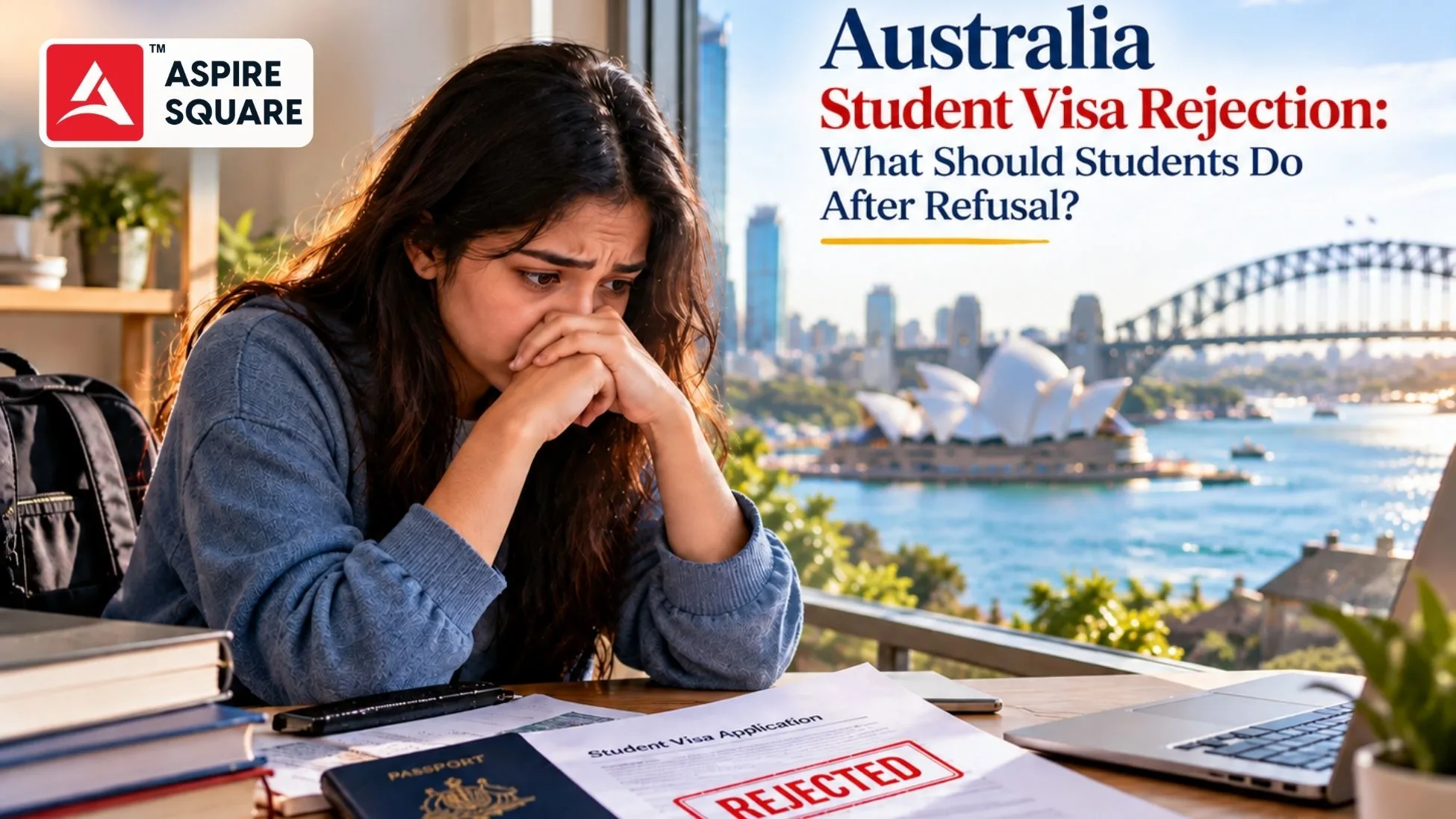
Receiving an Australia student visa refusal can put months of study planning on hold. However, a rejection is not a definite end to studying in Australia. The actions you can take will depend on the reason why the Department of Home Affairs refused the visa application, where you lodged the application, your visa status, and whether review rights apply. Read a decision thoroughly before making a hasty decision. The second attempt must address issues raised by the Department and provide reliable supporting evidence. This article covers the reasons for student visa rejection, the rules for the ART in 2026, when to reapply for the student visa, and how you can improve your next application.
Types of Student Visa Refusals
Student visa refusals can arise in different situations. An offshore applicant may receive a refusal while applying from outside Australia, while an onshore student may have a new Student visa application refused while already in Australia. The available options can differ significantly. Some onshore decisions may qualify for review by the Administrative Review Tribunal (ART), whereas offshore applicants often have more limited merits review options. The refusal notification should explain the decision, reasons, and whether review rights are available.
Common Reasons for Student Visa Rejection
An Australian student visa may be rejected if the application fails to meet one or more requirements of the Student visa subclass 500.
- Weak Genuine Student evidence: The Department may have concerns when your chosen course does not logically connect with your previous education, employment or future career plans. The Genuine Student assessment can also be undermined with inconsistent statements or unclear reasons for studies in Australia, or with unexplained study gaps.
- Insufficient or unclear financial evidence: Issues can arise when there is no proper evidence of access to the funds, the funds were not provided directly to the student, required expenses are not being paid for or when there is poor evidence of access to the funds.
- Incomplete or inconsistent documentation: Missing academic records, incorrect information, statements made but not backed by evidence, or English language evidence that conflicts with other parts of the application can cause significant concerns when applying.
What Should You Do After a Student Visa Refusal?
Do not submit another application immediately without first identifying and correcting the exact issues mentioned in your refusal decision.
Understand the Reason for Your Refusal
Carefully read the decision record of the Department. Review all of the criteria not met and evidence considered. A real student concern should be dealt with differently than a financial or documentation issue. The next step is to take a hands on approach towards those findings.
Strengthen Your Future Application
Construct your own evidence rather than copying your previous answers. Clarify your course choice, career progression, study gaps and future plans. Attach relevant academic, employment or professional documents which help to make clear and convincing the purpose of your Australian study pathway.
Fix Financial Concerns Before Reapplying
If finances caused the refusal, review your funds carefully. Show their genuine source, history, and accessibility. Depending on your circumstances, supporting records may include transaction histories, loan documents, scholarship evidence, sponsor details, or proof of the relationship between you and the person funding your studies.
Understand the Administrative Review Tribunal Process in the 2026 Context of Student Visa Rejection
When review rights exist, Australian migration decision making processes are considered by the Administrative Review Tribunal. On 1 June 2026, there was a significant change to a rule. With some exceptions, most student visa refusal reviews are now based on written submissions rather than oral hearings. This emphasizes the importance of making clear written submissions and supporting evidence. Eligibility and deadlines are included in the refusal notice and time limits are strictly followed. The ART may confirm, modify, rescind or review a decision.
How Long Should You Wait Before Reapplying for a Student Visa?
There is no set amount of time that automatically makes a new Student visa application stronger. The key is whether the initial rejection problems have been addressed. Reapplying within a few days with similar documents will result in the same flaws. Instead, utilize the time available to get back to you with reliable financial information, clarify any discrepancies, and provide supporting documents. Applicants who reside in Australia should also consider if visa status or application restrictions will prevent them from making another application.
Prepare a Stronger Application Before You Apply Again for a Student Visa
Treat the new application as if it were a new application, not a copy of the rejected application. Assess your course in comparison with your past learning and realistic career pathway. Provide clear responses that are Genuine Student answers, with evidence. Verify details of your Confirmation of Enrolment, English language documents, academic records, financial eligibility and personal details. If the refusal is because of unexplained funds, study gaps, or course progression, directly discuss such issues. All statements must be true, supported by evidence and in line with the documents submitted in your application.
FAQs
Can I appeal a student visa cancellation?
A Student visa cancellation may carry ART review rights in some circumstances, but this is not automatic. Check the cancellation notice immediately. It should explain whether the decision can be reviewed and the deadline for making that application.
When should I provide my information to the ART?
Deliver requested info within the specified time period by the ART and prepare written evidence in advance. As most student visa refusal hearings are being conducted without any hearing, it is important that the student visa refusal letter includes written material.
Does a visa refusal affect future Australian visa applications?
Refusals will be a part of your immigration record and may be taken into account in future applications. This does not necessarily mean that all future visas will be denied. However, these previous reasons ought to be revealed appropriately and adequately, supported by more substantial evidence.
Is there a hearing for an Australian Student visa refusal appeal in 2026?
Usually not. From 1 June 2026, the ART must generally decide student visa refusal reviews without an oral hearing. Limited exceptions can apply, while some cases already listed for a hearing before the change may continue under their existing arrangements.
Should I use an agent after a student visa refusal?
Professional assistance may be helpful in cases of refusal relating to Genuine Student concerns, financial evidence, visa restrictions or an ART review. Where Australia immigration assistance is provided, ensure that you are aware of the person giving your advice and the nature of the professional registration/legal qualification required.
Conclusion
Being refused a visa to Australia can be disappointing, but it’s important to take action according to the reasons for the visa refusal, not guesswork. Analyze the Department’s findings, determine if the ART review rights apply, rectify financial or Genuine Student issues, and submit new evidence when reapplying. In 2026, strong written documentation matters even more because most ART student refusal reviews proceed without an oral hearing. Speak with Aspire Square to review your refusal carefully and build a clearer, better prepared pathway towards your Australian study plans.