-
Ahmedabad

- 330-338 Devnandan Mega Mall, Opp. Sanyas Ashram, Ashram Road, Ellis Bridge, Ahmedabad – 380006
- +91 88 66 88 07 07
- inquiry@aspiresquare.com
-
Surat

- 1027, 3rd Floor, West Field Shopping Complex, Near ST Xaviers School, Ghod Dod Road, Surat – 395007
- +91 95122 24365
- inquiry@aspiresquare.com
-
Vadodara

- 418, Pinnacle Plaza, Near Tulsidham Char Rasta Manjalpur, Vadodara – 390011
- +91 75730 24365
- inquiry@aspiresquare.com
-
V.V. Nagar

- 105, Sigma Complex, Above D-Mart, Nr. Sardar Patel Statue, Vallabh Vidyanagar, Gujarat 388120
- +91 95 12 99 0707
- inquiry@aspiresquare.com

Last Updated Dec 24,2025
Australia PR Update 2025: A Complete Recap of the Year’s Major Changes

The Australian immigration landscape has undergone a massive structural overhaul in 2025. Following the comprehensive Migration Strategy review, the Australian Government has implemented a system that prioritizes high demand skills, regional development, and streamlined pathways for qualified professionals. For applicants from India, particularly the high-migration corridors of Gujarat and Punjab, these changes offer both new opportunities and stricter financial requirements.
This pillar article provides an in-depth analysis of the 185,000-place migration program, new income thresholds, and the revamped points system to help you navigate your permanent residency journey this year.
The 2025-26 Migration Program Planning Levels
The Department of Home Affairs has confirmed a planning level of 185,000 places for the 2025-26 permanent migration program. A significant 71 percent of this quota approximately 132,200 places is dedicated to the Skill stream.
The government’s primary objective in 2025 is to address long-term national interest needs. This means a shift away from short-term “gig economy” labor toward high-productivity sectors. For Indian professionals, this translates to higher chances of success in fields like healthcare, renewable energy, and advanced manufacturing.
Key Changes to Income Thresholds (TSMIT and CSIT)
Effective 1 July 2025, the Australian Government has updated the income requirements for skilled migration. This is a critical update for those pursuing the Employer Nomination Scheme (Subclass 186) or the Temporary Skill Shortage (Subclass 482) pathways.
The Temporary Skilled Migration Income Threshold (TSMIT), now often referred to as the Core Skills Income Threshold (CSIT), has been increased to AUD 76,515 plus superannuation. This 4.6 percent increase from the 2024 level ensures that skilled migrants are paid at market salary rates.
For high-end professionals, the Specialist Skills Income Threshold (SSIT) has been set at AUD 141,210. Applicants earning above this amount benefit from expedited visa processing and fewer occupational restrictions, provided they are not in the trades or labour sectors.
The New National Innovation Visa
In a major 2025 update, the Global Talent (Subclass 858) visa has been replaced by the National Innovation Visa. This new subclass is designed to attract exceptionally talented individuals who can drive growth in Australia’s priority sectors.
Unlike the previous points based system, the National Innovation Visa focuses on proven excellence and the potential to contribute to the Australian economy. It targets entrepreneurs, researchers, and global leaders in technology. This remains a direct pathway to permanent residency without the lengthy points testing process.
Subclass 189, 190, and 491: Current Trends
The General Skilled Migration (GSM) categories remain the most popular for Indian applicants. However, the distribution of invitations has shifted.
Subclass 189 Skilled Independent Visa
This visa is now highly targeted. In 2025, invitations are almost exclusively issued to “essential” occupations. If you are a Registered Nurse, Secondary School Teacher, or Social Worker, this remains your primary PR route. For other occupations, the quota has been tightened to roughly 16,900 places.
Subclass 190 State Nominated Visa
States like Victoria, New South Wales, and Western Australia have received robust allocations for 2025. The 190 visa is currently the most viable route for IT professionals, engineers, and accountants who can demonstrate high points and living commitments to a specific state.
Subclass 491 Skilled Work Regional Visa
With 33,000 places allocated, the 491 visa is the government’s preferred tool for regional development. For applicants from Gujarat who may struggle to hit the 95-point mark for a 190 visa, the 491 offers a reliable alternative. After living and working in a regional area for three years, you can transition to the Subclass 191 Permanent Residency visa.
Changes in English Requirements
From 7 August 2025, the Australian Department of Home Affairs now accepts a larger set of English language tests for PR and other visa applications:
Accepted English tests now include:
- IELTS Academic & General Training (including One Skill Retake)
- PTE Academic
- TOEFL iBT
- Cambridge C1 Advanced
- OET (Occupational English Test)
- CELPIP General (new)
- LanguageCert Academic (new)
- Michigan English Test (MET) (new)
These tests must all be taken in-person at an authorised, secure test centre to be valid for visa purposes. Online/at-home versions (e.g., IELTS Online, TOEFL iBT Home Edition, CELPIP Online, OET@Home) are no longer accepted for Australian visas after this date.

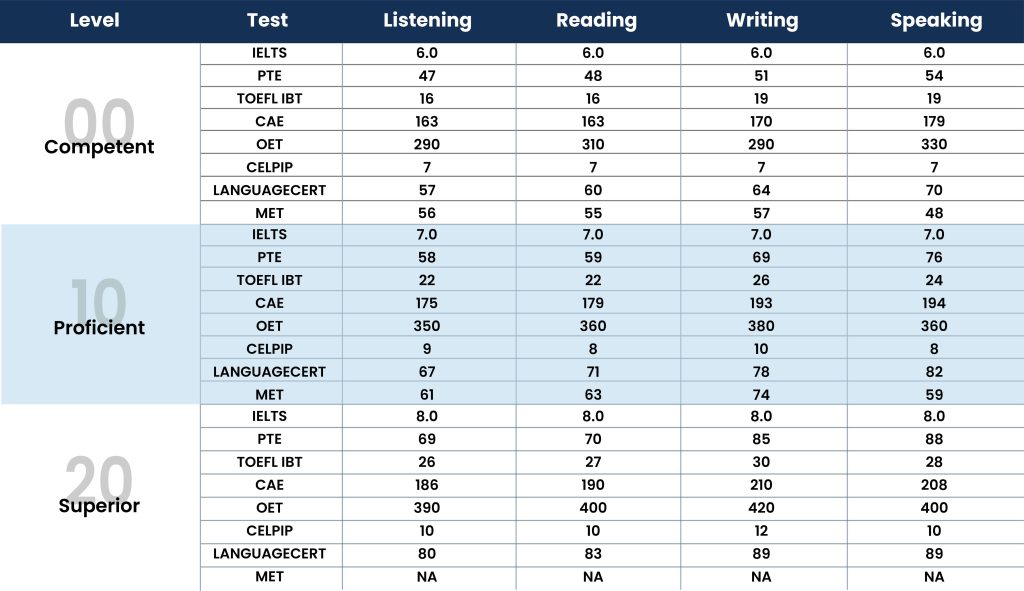
Changes to Score Requirements
For tests taken on or after 7 August 2025, there are updated score thresholds for the different English proficiency levels commonly used in PR points scoring and visa eligibility:
English Proficiency Levels & Example Requirements
Note: Levels such as Functional, Vocational, Competent, Proficient and Superior are used for different visas and points test purposes.
Priority Processing for Essential Sectors
If you are working in one of the following sectors, your 2025 PR application will receive priority processing, often resulting in grants within 6 to 8 months:
- Healthcare and Nursing: All nursing specializations and medical practitioners.
- Teaching: Early childhood, primary, and secondary education.
- Construction: Project managers, surveyors, and specialized trades like electricians and plumbers.
- Green Energy: Engineers specialized in solar, wind, and hydrogen technologies.
New Workplace Rights for Migrants
The 2025 updates also include enhanced protections for temporary visa holders. The “Migration Amendment (Strengthening Employer Compliance) Act” is now in full effect. This allows migrants to report exploitative workplace conditions without risking their visa status. This is particularly beneficial for those on the 482 visa who are transitioning to PR through the Subclass 186 pathway.
Strategic Tips for Indian and Gujarati Applicants
To maximize your chances of securing an Australian PR invitation in 2025, consider the following strategies:
Target Regional Areas: Many Gujarati families have found success in regional hubs like Adelaide, Perth, or Geelong. These areas offer higher invitation rates and lower points thresholds compared to Sydney or Melbourne.
Focus on PTE Academic: Most successful Indian applicants now opt for the PTE Academic test, as it often yields higher scores for the “Superior English” category compared to IELTS.
Skills Assessment Timing: Ensure your skills assessment is from a recognized body like ACS (for IT), EA (for Engineering), or CPA (for accounting). Assessments should be renewed well before expiry to avoid being removed from the EOI pool.
Frequently Asked Questions
What is the minimum points score for Australia PR in 2025?
While the legal minimum is 65 points, the competitive invitation score for most occupations in 2025 ranges between 85 and 95 points. Healthcare and teaching occupations may receive invitations at 75 to 80 points.
How much money is required for Australia PR from India?
Costs include visa application fees (approximately AUD 4,910 for the main applicant), skills assessment fees (AUD 500-1,900), and English test fees.
Can I apply for PR if I am over 45 years old?
Generally, the age limit for skilled PR is 45. However, the new National Innovation Visa and certain high-income exemptions for the Subclass 186 visa may allow older applicants to apply if they meet specific criteria.
Is the PTE still accepted for Australia PR in 2025?
Yes, PTE Academic is widely accepted and remains a popular choice for Indian applicants. Ensure your test result is less than two years old when you receive your invitation.
How long does the Australia PR process take in 2025?
Processing times vary. Priority sectors (healthcare/teaching) are being cleared in 6 months. Standard skilled migration (190/491) typically takes 10 to 15 months depending on the state and the complexity of the case.
Secure Your Australian Future Today
The 2025 migration updates represent a “quality over quantity” approach. While the rules have become more specific, the pathways for genuine, skilled professionals are clearer than ever.
Waiting for the next invitation round without a strategy could cost you valuable points as you age. Our team of experts specializes in helping Indian professionals navigate the complexities of State Nominations and Skills Assessments.
Contact our Australian Migration Consultants today for a detailed eligibility check and a customized PR roadmap. Let us help you turn your Australian dream into a permanent reality.